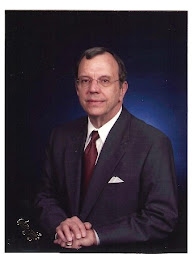
Almost one year ago to the day, I included in my October 24th blog POTPOURRI III mention of meeting one of America's foremost artists, Will Barnet, at a screening of a documentary film on his life in New York the previous week. That opportunity was a direct result of going to Maine two months prior and reconnecting with a dear high school friend who lives there (re: my RECONNECTIONS blog of August 29, 2010) and who, along with her husband, was involved with the production of that film. Unbeknownst to me at the time, those two events helped plant the seeds for what has now blossomed into the current spectacular showing of a collection of Will Barnet's drawings at the Arkansas Arts Center which are on exhibit from now until January 15, 2012.
For those like me who until last year were unfamiliar with Will Barnet, allow me to briefly acquaint you with this most remarkable man. Born 100 years ago in Beverly, Massachusetts on May 25, 1911, where he began painting self-portraits in the basement of his parents' home, he then progressed to formally studying art at the Museum of Fine Arts in Boston in his teens during which time he added seascapes and family cats to his portfolio. In 1931 he left for New York and began his 50 year association with the very Art Students League where I was privileged to see the documentary film mentioned above, as well as meet his lovely wife of 59 years, Elena. As revealed in Robin Finn's article in the New York Times last October, the city became his muse where he began "sketching the forlorn and angry faces he saw on every corner" developing his style of "stark, brooding social realism". At the same time he focused on and mastered print techniques at the Art Students League where he taught Mark Rothko in that process. In addition he has taught at Cornell University, Cooper Union, Yale University, the Pennsylvania Academy of the Fine Arts and Montclair State University in New Jersey where he was a visiting art professor from 1940 to 1945, and where his son, Peter, has taught art for forty years. His body of work has been featured over the years at the Metropolitan Museum of Art, the Museum of Modern Art, the Philadelphia Museum of Art, the National Gallery in Washington D.C., the Los Angeles County Museum of Art, the Albright-Knox Art Gallery and the Whitney Museum of American Art, so the Arkansas Arts Center is in very good company.
Over the last eight decades he has constantly elected to travel the road less traveled artistically by opting to pursue that which was neither popular nor easy. As noted in Finn's NYT article, his work "morphed from social realism to a nuanced abstraction that used flat planes of color to convey emotion and depth". A clear example of this unusual technique is demonstrated in the lithograph "WAITING" depicting a group of women forlornly awaiting the return of their husbands from the sea, a recurring theme of Mr. Barnet's, which you can see at the Arts Center alongside his prototype pencil drawing of that very scene. In fact color is so important to him in his paintings that he has been known to experiment for months if not years trying to blend the precise shade and hue of a particular color to achieve those artistic dimensions. He also prides himself in saying that "I love moving on and finding fresh ways to use color and form. That's been my excitement".
Even though as a centenarian he still continues to engage in his passion of art by spending three to four hours a day creating it, albeit from a wheelchair, he is not oblivious to his mortality, as related in a story he told for the same NYT article about his grandfather's impending death at the age of 96. At the age of six, Will was taken to say goodbye to his grandfather who said to him at that time: "Do you think it's easy to die at the age of 96?" Consequently, we in Central Arkansas are truly blessed to have this marvelous 85-piece collection of Will Barnet drawings at our doorstep which are beautifully arranged chronologically from 1928 to 1990 to show the evolution of the style and content of a truly amazing artisan who refuses to quit. To get a glimpse of his remarkable range and talent please visit the Arkansas Arts Center between now and January 15, 2012. You will not be disappointed.
As a late PS, there is a featured article on Will Barnet in the Arts and Leisure section of today's New York Times, so our exhibition here in Little Rock is very timely.
Sunday, October 9, 2011


Saturday, September 24, 2011
"Let Them Eat Cake"
Recent news stories and studies about the plight of the young, poor and hungry in America caused me to reflect on the French Revolution (1789-1799) which, essentially, was prompted by a growing disparity between the rich aristocracy and the peasantry who sought equality and rights as a result of a shortage of their main food staple, bread. Whether you believe the famous quote of "let them eat cake" actually came from Marie Antoinette is irrelevant because it generally reflected the selfish attitude of the French upper class at the time, of which she was a most prominent member. What is important to remember is that things did not turn out very well for her or the aristocracy in general, a historical lesson that may well apply today.
Fast forward two hundred years and we see alarming trends in our society which seem to mirror 18th century France. Let's start with the growing inequality between the rich and poor in America and how it is infecting our national soul and purpose. As reported last May in VANITY FAIR in an article by Joseph Stiglitz entitled Of the 1%, by the 1%, for the 1%, the top one percent of Americans now earn 25% of all income and control 40% of all wealth, a situation he compares with Russia and Iran, as well as some countries in the Middle East where less than 1% of the population controls the majority of wealth. He further contends that such income and wealth inequality shrinks opportunity, undermines efficiency and lessens investment in infrastructure, research and education out of reluctance of the wealthy "to spend money on the common needs" of society. As the rich become richer, they lose their sensibilities toward government helping the less fortunate with things like parks, education, medical care and security because they (the rich) are able to pay for all those things themselves. It's just the classic mindset of "I've got mine, now you get yours". The main goals of many wealthy people always seem to be to lower taxes and reduce regulation. But perhaps the greatest cost to our society in Mr. Stiglitz's view is "the erosion of our sense of identity, in which fair play, equality of opportunity, and a sense of community are so important". In fact he notes that Alexis de Tocqueville even observed these qualities as being part of the American fabric and called them "self-interest properly understood". However, in this context "properly understood" are the key words, as they refer to the self-interest of others, or the common welfare, which is a precondition for one's own ultimate well-being. Put another way by the author, even though the rich can afford the best of everything, they do not seem to understand that "their fate is bound up with how the other 99 percent live".
Framing this message in current terms, consider the following facts as a confirmation of "shrunken opportunity":
1. In 2010 the poverty rate of 15.1% (46.2 million people) was the highest since 1933.
2. In 2010 the rate of those without health care insurance was 16.3% (49.9 million people).
3. 5.9 million (14.2%) young adults between age 25-34 now live back home with their parents in what could be termed "re-filling the empty nest".
4. Over 14 million Americans (9.1%) are still unemployed.
5. Only 55.3% of young adults between 16-29, which some now refer to as the "lost generation", are currently employed, the lowest level since WWII.
6. The poverty level among those under 25 years of age is 37%.
7. Anywhere between 700,000 and 2 million people are homeless in America on any given night, 36% of whom are families with children.
Without laying blame for the dismal condition of our national economy, as there is plenty to go around, the question of what to do now looms large over the political horizon. Currently, the administration's proposed American Jobs Act seems to address a wide spectrum of concerns on both sides of that landscape including tax relief for wage earners and small businesses, increased revenue from the rich, closed tax loopholes for large corporations and "spending money on the common needs" mentioned above (i.e. infrastructure, education and research). As such, it would seem to be in the best interest of America to learn from history, pass this legislation and hopefully avoid the fate of the rich French and their disconnect with the poor as evidenced by their shouting "Let them eat cake"!
Sunday, September 11, 2011
Day if Infamy - 21st Century Style
Having been born just before December 7, 1941, I grew up with the term "Day of Infamy" sealed in my memory. Today, 70 years later, we observe the 10th anniversary of another "Day of Infamy", when four hijacked airliners attacked this country, two destroying the World Trade Center in New York, one striking the Pentagon in Washington DC and the fourth being denied reaching its final destination in Washington due to the extreme bravery of the passengers on board who overtook the cockpit and forced the crash landing in a field in Shanksville, Pennsylvania. Just as with those who remember where they were on that day in 1941 when Pearl Harbor among other Pacific locations was bombed, we who are old enough today remember exactly where we were on September 11, 2001.
While it would be easy to default to the horrors of that day, I will leave those memories to the multitude of programs which have been and will be aired on the many radio and television programs dedicated to what has become known in its abbreviated term as 9/11. Rather, I would like to focus on the manifestations of what President Franklin Roosevelt termed "the unbounded determination of our people" in his famous Day of Infamy speech on December 8, 1941. While his commitment to "make certain that this form of treachery shall never endanger us again" obviously missed the mark, the changes both good and bad that have ensued over the past decade have clearly changed our lives forever. However, our commitment to memorialize those who made the ultimate sacrifice, pick up the pieces, adjust to the circumstances, rebuild and move on clearly embodies that boundless American spirit in times of tragedy and destruction to which Roosevelt referred. It just seems to be part of our national DNA.
There is no better symbol of that quality of persistence than the construction of the World Trade Center Memorial being dedicated today, as well as the new Freedom Tower presently under construction. Not only does the new tower reflect what one person connected to the project termed a "visible symbol of survival and strength", it does so in a truly magnificent and beautiful way. It is also a tribute to our country's engineering genius in that it will withstand any future attack such as that which destroyed the twin towers ten years ago. See for yourself at http://www.nyc-tower.com/category/videos/.
And as if all that has been achieved at ground zero and the spectacular repair of the Pentagon in one year is not enough, the courage and bravery of the passengers aboard Flight 93 that caused it to plow into a Pennsylvania field instead of hitting its intended target is also being remembered with the dedication of a memorial this weekend. Thanks to childhood friends whose son was responsible for raising funds for that memorial, you can hear about it in their own words below which are included with their full permission and consent.
Dear Relatives and Friends,
At 10:03 am on September 11, 2001 United Flight 93 became the fourth plane, out of the quartet of four hijacked passenger jets, to crash in a rural area of Pennsylvania. Forty passengers on the plane made a decision to storm the cockpit in hopes of taking back control of the aircraft. Instead, through their valiant efforts, the hijackers were forced to crash the plane, killing all on board, thus bringing to a close the horrific events of 9/11/2001. At the time of the crash the plane was less than 200 miles from its intended target, our Capitol Building in Washington DC.
Next Saturday, September 10, 2011, the first part of the Flight 93 National Memorial will be dedicated near Shanksville, Pennsylvania. For the last few years our son, King Laughlin II as an employee of the National Park Foundation, has been responsible for the national effort to raise funds to complete the Memorial. Linda and I will be in attendance on September 10th and 11th at the Dedication.
For those of you who may be interested in following the Dedication events on September 10th the event will be streamed live at www.history.com/flight93 or http://www.honorflight93.org/
You can see more about the Memorial at www.nps.org/flight93 or www.honorflight93.org or www.flight93memorial.org or www.foxnews.com/freedom August 25, 2011 program.
Fly your American Flag next weekend to honor all who gave their lives and especially to honor the Forty Souls on Flight 93 who struck the
first blow against the terrorist and saved our Nation’s Capitol.
Thank you,
Linda and King Laughlin
“God Bless America”
Enough said.
Sunday, September 4, 2011
North by Northwest (Arkansas, that is)
Sometimes life will unknowingly hit you with a spate of pleasant surprises when you least expect them. Such was the case last week when my wife and I made a spur of the moment road trip to the bustling region of Northwest Arkansas to meet and have dinner with our son, who had flown in from California for a business meeting. Since we rarely travel to that section of the state, even though we both graduated from the University of Arkansas in the early 60's, we had decided to take in some of that area's sites and attractions, some already known to us, some unknown.
First, we took advantage of its proximity to visit the new Crystal Bridges Museum of American Art presently under construction in Bentonville through the generosity of Alice Walton, one of the heirs of the founder of Wal-Mart. As many already know, millions of dollars are being spent to construct a spectacular facility to house and display one of the great collections of works by American artists. But the real surprise was the beautiful walk through the woods to get to the observation deck to view the building itself which is scheduled to open this November 11th. When completed, it is expected to draw people from all over the world to enjoy this great body of work, but to see for yourself the status of this endeavor, please go to http://crystalbridges.org.
Next, of course, was the obligatory visit to the U of A campus in Fayetteville to seek out old haunts and memories. One of the first things to grab our attention was the face of the campus. With the exception of the area of green space that still exists in front of Old Main, virtually every square inch of land seems to have some sort of new structure on it including a library, dorms, fraternity houses, sorority houses, parking garages and, of course, the huge athletic complex which is soon to undergo another multi-million dollar expansion. Another thing that caught our eye was the undergraduate dress code, or lack thereof. Long gone are dresses, slacks, khakis, button down shirts and blouses. Boys now wear baggy shorts, T-shirts and flip-flops, and girls go for short shorts, T-shirts and ball caps and all are perennially linked into their tech gadgets, be it cell phones, smart phones or I-pods. Think beach. Naturally, as the old folks searching for our chiseled names in our respective senior walks, we were the object of their humorous entertainment, but we persevered and actually found them. But thanks to the digital age, those names have both been recorded for posterity, so, thankfully, we will not have to suffer that embarrassment again.
Our last stop before leaving campus involved a trip to my wife's old sorority house, Kappa Kappa Gamma. Three young members greeted us on the porch, one of whom escorted us through the downstairs and brought my wife up to date on what was happening within the "Kiss Kiss and Giggle" crowd, including the fact that 135 had just pledged, so they both were happy about that. Additionally, they got a kick out of comparing notes on life in KKG now verses then, including no date call, pledging freshmen instead of sophomores, many members living outside of the house due to shortage of space and having to conduct chapter meetings elsewhere for the very same reason. In bidding our goodbyes, I asked the girls why they weren't upstairs studying, to which one held up her I-Phone meaning, I guess, that in fact she was.
As we were leaving the campus, we happened by Underwood's Jewelers on Dickson Street, which held some fond memories for me. For one, Bill Underwood, an old friend, had played an instrumental role in my acing one of my senior business school classes which I have never forgotten. For another, he had been the source of several purchases through the years, not the least of which were the wedding rings that adorned both my wife's and my fingers. Hers had grown tight over the years, so I thought this would be a perfect time to get the original creator to fix the problem. As it had been twenty-five years since I last dropped in to visit with Bill, I fully expected him to have retired, but lo and behold he was not only there but was still doing what he had always done - creating unique and beautiful pieces of jewelry. What was intended to be a fifteen minute visit turned into over an hour of enjoyable quality time with an old friend and one talented guy still plying his craft. And, yes, we left her ring to be fixed by the old master.
And, finally, on the way home we detoured slightly to the north and east to see what was going on at the Medieval Castle currently being constructed outside of Lead Hill, Arkansas, which presented a true contrast to all of the new and modern structures we had been exposed to above. No one is in a hurry here. Started in 2009 on sixty acres of donated land, these committed artisans are doing it the old fashion way from making the tools they use, quarrying the stone, chiseling and laying the sections in exact patterns, constructing ancillary structures true to that period in support of their work (e.g. a blacksmith shop, horse stable, working farm, etc.) and actually dressing the part. Unlike many modern construction projects, this one has a twenty year time frame, so the investors are not in it for the quick buck. You can learn about it all at
http://www.ozarkmedievalfortress.com/en-us/visit-the-medieval-castle.
Having done the "north by northwest" bit, perhaps our next trip will be south by southwest area of the state with which neither of us has a history or any knowledge. In the meantime Happy Labor Day weekend to all!
Subscribe to:
Posts (Atom)